Marketing to healthcare professionals is no easy feat. Doctors and physicians are busy experts with tight schedules, gatekeepers, and strict preferences. Traditional outreach methods like cold calls or in-person visits often struggle to break through. Yet, the opportunity in healthcare marketing is immense — the United States alone has over a million practicing physicians, representing a vast pool of potential partnerships and customers. How can global marketers and vendors effectively tap into this market? The answer lies in leveraging digital channels and data-driven strategies. One such game-changer is a verified USA Doctors Email List . By using a targeted email address list of doctors and physicians, marketers can connect directly with the right audience, overcoming many of the usual hurdles in healthcare marketing. In this comprehensive guide, we’ll explore the benefits of using a doctors email list, how to deploy a healthcare email database effectively, and why the L...
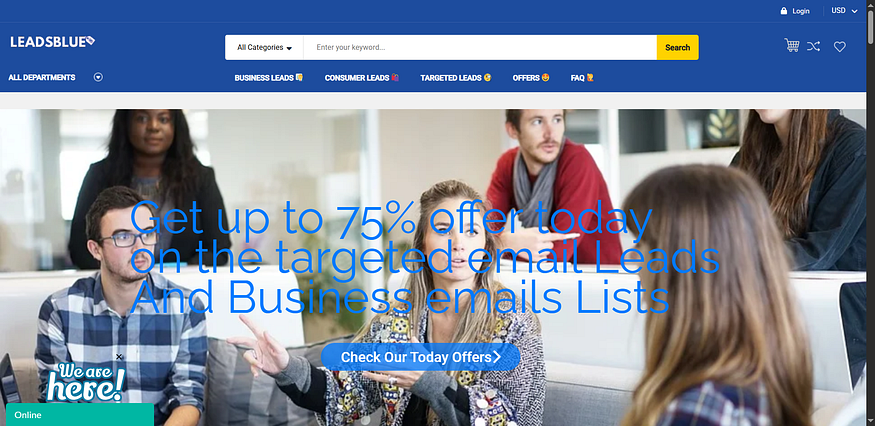
In today’s competitive B2B market, having a highly targeted email database can make or break your outreach campaigns. Buying an email list or email database is a common way to jump-start sales and marketing efforts, but the results depend entirely on data quality. Leadsblue.com positions itself as a global provider of curated B2B email lists, with databases segmented by industry, job title, country and more. According to independent reviews, Leadsblue focuses on “quality over quantity”, offering verified, niche-targeted lists that can be downloaded instantly. In this article, we’ll examine Leadsblue’s core services, unique advantages, and how it stacks up against other major B2B database providers (ZoomInfo, UpLead, Lusha, etc.). We’ll also look at specific benefits for startups, sales teams, marketers and enterprises, outline pricing, and answer common questions about using email lists for B2B outreach.
Overview of Leadsblue.com and Core Services
Leadsblue.com began around 2018 as a pay-per-list B2B email vendor. Its core service is selling pre-built email databases: each list is “handpicked, verified, and segmented by industry, job title, country, and more”. For example, you might buy a list of “Fintech CEOs in Germany” or “Dental Clinics in Canada”, delivered as a downloadable CSV after purchase. This contrasts with on-demand SaaS tools; instead of building the list yourself, Leadsblue does the research and gives you an off-the-shelf list.
Key aspects of Leadsblue’s service include:
- Curated, Ready-to-Use Lists: Each list is manually compiled and verified, so buyers get a clean set of contacts without the typical cleanup work. The site emphasizes that you won’t find “bloated databases filled with dead emails” — they focus on verified leads only.
- Niche Targeting: Lists can be extremely specific. Leadsblue advertises “hyper-niche lists”, such as location-based and industry sub-segments. This granularity helps marketers hit very precise targets.
- Instant Access: After payment, buyers can immediately download their list. There’s no waiting for a salesperson to send files or handle requests — you pay, you download.
- GDPR-Friendly Compliance: Lists are built with data privacy laws in mind. Leadsblue notes “GDPR-friendly” processes, meaning EU data protection requirements are considered during list creation.
- Transparent One-Time Pricing: Every list has a clear, fixed price shown upfront (no need to request a quote). Leadsblue markets itself with “one-time pricing (no subscription traps)”, meaning you only pay for the lists you buy, with no recurring fees.
- Live Support: Unlike fully self-service tools, Leadsblue offers customer help via live chat and email to assist with list selection and questions.
Together, these services mean a buyer (e.g. a sales rep or marketer) can quickly select a ready-made, targeted list, pay a one-time fee, and begin outreach within minutes. The emphasis is on speed and data quality — you don’t waste time collecting and verifying contacts yourself.
What Makes Leadsblue.com Stand Out
Several factors differentiate Leadsblue from typical B2B data vendors:
- No Bloat — Just Quality: Leadsblue stresses that its databases aren’t “bloated” with outdated or irrelevant contacts. They claim each email is verified and up-to-date, so you avoid the bounce rates and spam issues common with low-quality lists. In the words of one user, other providers gave “dead” or generic emails, whereas Leadsblue delivered “working, segmented” lists.
- Transparent, One-Time Pricing: Many competitors require a subscription or multi-month commitment. Leadsblue, by contrast, simply posts a price for each list and charges once. As a review notes, Leadsblue keeps pricing simple and upfront, eliminating “Request a Quote” hassle. This model benefits businesses that only need occasional lists or want to avoid ongoing fees.
- Instant Delivery: Leadsblue’s workflow is fully automated after payment. You pay and immediately get your list, with no back-and-forth. This instant gratification is a plus over services that require manual processing. A comparison chart highlights Leadsblue’s “Instant” delivery speed, whereas providers like UpLead or ZoomInfo involve manual steps or scheduling.
- Hyper-Niche Lists: While many providers offer broad search tools, Leadsblue advertises extremely granular lists. They cite examples like “Cannabis Retailers in California” or “Dental Clinic Owners in Canada”. This hyper-targeting allows marketers to tailor campaigns tightly to their ideal customers.
- High Customer Satisfaction: Leadsblue claims a strong track record: reportedly over 63% of users buy again. Such a high return rate (much better than average for list vendors) suggests customers find real value in the data’s performance.
- Dedicated Support: Leadsblue provides live chat and email support as part of the package. This contrasts with some freemium tools where you’re on your own. Users have noted the support team’s responsiveness and help in refining list criteria.
In short, Leadsblue’s unique selling points are quality-focused data, ease of access, and pay-as-you-go simplicity. These set it apart from subscription-heavy, broad-scope providers.
Who Benefits: Startups, Sales Teams, Marketers, and Enterprises
Leadsblue’s model appeals to a range of users:
- Startups and Small Businesses: Emerging companies often need to quickly build pipelines without big budgets. Using Leadsblue, a founder can reach a niche audience (e.g. key decision-makers in a target industry) instantly, accelerating sales cycles. As one review notes, SaaS startup founders used Leadsblue lists to “reach decision-makers directly — saving months on pipeline building”. The one-time pricing is also budget-friendly for lean teams, avoiding large monthly subscriptions.
- Sales Teams: Sales reps need qualified contacts to hit quotas. With Leadsblue, reps get lists of the exact job titles and industries they want (for example, C-suite executives in fintech) and can plug them into their CRM or outreach tool. This enables more focused cold email campaigns. In fact, an example testimonial said sales reps could build “hyper-targeted sequences from C-level and industry-specific lists, increasing reply and demo rates”. In practice, sales teams using Leadsblue can bypass tedious prospecting and start reaching out to ready-fit leads.
- Marketing Agencies & Marketers: Agencies running B2B campaigns appreciate the specificity. They can buy lists tailored to each client’s niche (e.g. IT managers in London) and avoid wasted effort on irrelevant contacts. Leadsblue’s segment filters (industry, title, location) let marketers craft campaigns to tight audience profiles. The instant delivery means agencies can meet client deadlines without waiting for data pulls. Agencies also get reliable support to refine targeting before purchase.
- Enterprises and Large Companies: Larger corporations typically use enterprise tools (ZoomInfo, etc.), but Leadsblue can complement them. For example, a global firm running a pilot campaign in a new region might use Leadsblue’s GDPR-compliant lists to test outreach before subscribing to big platforms. The fact that Leadsblue lists are GDPR-friendly and cover multiple countries (it calls itself “global”) makes them suitable for international teams. Large companies can also benefit from breaking annual deals into one-time purchases for discrete projects. Although Leadsblue doesn’t replace full-scale CDPs, it offers a convenient, compliant way to augment contact data on demand.
Pricing and Service Plans
Leadsblue’s pricing model is straightforward: pay-per-list with no subscriptions. Each list has a fixed price shown on the website, and you pay only for what you buy. This was highlighted as a key feature: “One-time pricing (no subscription traps)”. There are no tiered plans to sign up for — just select the list you need, pay once, and download.
For context, many competing providers use recurring pricing. For example:
- Lusha’s plans start at about $37 per user per month (with credit limits).
- Apollo.io starts at $49 per user per month.
- ZoomInfo and UpLead require signing up for monthly or annual subscriptions (sometimes with minimum terms).
Because Leadsblue charges per list, it can be more cost-effective for users who need only occasional data. There is no public “bundle” or discount pricing stated, but anecdotal evidence suggests the prices per list are competitive. (Exact prices vary by list size and target criteria; Leadsblue claims to be transparent, listing the price on each product page.) In essence, you only pay for the leads you download, and nothing more. This contrasts sharply with high monthly fees or credits that might go unused.
Overall, Leadsblue’s pricing appeals to small teams or short-term projects. For companies needing ongoing access to huge data volumes, traditional subscriptions might make sense. But for one-off campaigns or hyper-targeted lists, Leadsblue’s one-time model can save money.
Comparing Features: Leadsblue vs. Other B2B Providers
To understand where Leadsblue fits, it helps to compare key features of major B2B data providers:
Leadsblue
- Data Coverage & Focus: Curated, pre-built B2B email lists by industry and job title
- Pricing Model: One-time fee per list (Pay-per-list)
Key Strengths:
- Instant downloads
- Highly niche and verified lists
- GDPR-compliant
- No recurring subscription required
UpLead
- Data Coverage & Focus: Over 160M+ global B2B contacts with real-time verification
- Pricing Model: Monthly or annual subscription
Key Strengths:
- 95% accuracy guarantee
- Large, searchable contact database
- 24/7 support
ZoomInfo
- Data Coverage & Focus: Comprehensive global firmographics and intent data
- Pricing Model: Enterprise license (custom quote)
Key Strengths:
- Deep company insights
- Covers both contact and company-level data
- Enterprise-grade analytics and enrichment tools
- Trusted by Fortune 500 companies (but expensive)
Lusha
- Data Coverage & Focus: 155M+ contact profiles via browser extension
- Pricing Model: Per user, starting at $37/month
Key Strengths:
- Fast email/phone lookup
- Easy LinkedIn lead scraping
- Free tier available
- Used by 1.5M+ professionals
Apollo.io
- Data Coverage & Focus: 220M+ contacts with built-in CRM tools
- Pricing Model: Starts at $49/month per user
Key Strengths:
- Email automation tools and sequences
- 65+ advanced search filters
- Salesforce/HubSpot integration
- Free tier included
Hunter.io
- Data Coverage & Focus: 117M+ email addresses from public web domains
- Pricing Model: Freemium with pay-as-you-go options
Key Strengths:
- Strong domain-based email discovery
- Built-in email verifier
- GDPR and CCPA compliant
Other Providers (Lead411, AeroLeads, etc.)
- Data Coverage & Focus: Varies — often U.S.-focused or niche segments
- Pricing Model: Monthly subscription or credit-based
Key Strengths:
- Some specialize in buyer intent or LinkedIn data
- Flexible features depending on tool
- Often require longer-term subscriptions
From this comparison, note the contrasts:
- Instant Access: Leadsblue offers immediate downloads of entire lists, whereas tools like UpLead or ZoomInfo require you to search, select, and sometimes wait for exports. In a 2025 comparison chart, Leadsblue was marked as “Instant” delivery and “One-time Only” pricing, while competitors (UpLead, ZoomInfo, Lusha, etc.) were mostly slower and subscription-based.
- Targeting Depth: Leadsblue’s pre-built lists target specific niches right out of the box. By contrast, platforms like UpLead/Apollo provide broad filters but still require manual list assembly. For example, UpLead allows filtering by firmographics (tech stack, industry) but then yields credits on a subscription, not immediate lists.
- Compliance: Leadsblue explicitly highlights GDPR-safe data collection. Some older providers (e.g. InfoUSA/Data Axle) are flagged as not GDPR-compliant in one analysis. Meanwhile ZoomInfo and Lusha also claim compliance across regions.
- Pricing: Leadsblue’s per-list model eliminates monthly commitments. In contrast, Lusha, ZoomInfo, and others require regular subscriptions (UpLead, Lusha, Apollo all charge per user per month).
- Support & Ease: Leadsblue includes live chat assistance, which is not typical for purely self-serve tools. Some competitors only offer email support or community forums.
In summary, Leadsblue trades breadth for convenience: it has fewer total contacts than platforms like ZoomInfo, but it wins on speed and simplicity. For many customers — especially those needing quick, targeted outreach — this trade-off is appealing.
Frequently Asked Questions (FAQ)
Is it legal to buy email lists? Legality depends on context. In the U.S., the CAN-SPAM Act does not forbid buying email addresses outright, but it requires each commercial email to include a clear unsubscribe option. However, other regions have stricter consent rules. For instance, Canada’s CASL generally requires explicit opt-in (and notes that “buying a list does not count as an opt-in”). Similarly, EU’s GDPR mandates transparency and consent for personal data usage. In practice, this means you should only buy business (B2B) email lists and use them responsibly — for example, targeting corporate roles rather than personal emails, and always including an easy opt-out link in your messages. Expert guidelines also advise verifying emails before sending and sticking to compliant vendors to avoid spam complaints. In short: Buying a B2B email list is not inherently illegal, but you must use it legally — follow CAN-SPAM/CASL/GDPR rules, honor unsubscribe requests, and ensure recipients are relevant businesses.
What makes a good B2B email database? The key factors are accuracy, relevance, and freshness. A high-quality B2B list should have up-to-date, validated contacts so your emails don’t bounce or hit spam traps. According to data specialists, “data accuracy is everything” — even one vendor switched providers because 80% of its old data was outdated. Good databases are segmented by firmographics (industry, company size, location) and contact info (job title, department). Leadsblue, for example, prides itself on “verified, segmented” contacts. Compliance with data laws (GDPR, CCPA, etc.) is also a quality marker — it means the data source followed proper consent practices. Finally, ease of use and support matter: a clean, downloadable list with filter options saves time. In short, a strong B2B email database will minimize bad addresses, let you target exactly who you need (e.g. “CTOs in fintech”), and come from providers who respect privacy laws.
How do I use an email list for marketing? Once you have a clean list, the best results come from targeted, personalized campaigns. First, segment the list by relevant criteria (industry, role, region, etc.) so each subset receives messages tailored to their interests. For example, if you sell software to restaurants and hospitals, send different pitches to those groups. Research shows segmented, personalized emails dramatically outperform generic blasts — one study found segmented campaigns can yield ~$36 in return for every $1 spent. Use clear, compelling subject lines and personalize content (e.g. include the recipient’s name or company) to boost open rates. Tools like marketing automation or CRM integrations help manage this. Always include a strong call-to-action (e.g. scheduling a demo) and an easy unsubscribe link (to comply with laws). After sending, monitor open/click metrics and use email verification tools to clean any bad addresses. In short, successful email list marketing means sending relevant content to the right people — and constantly refining your approach based on feedback and engagement.
Is buying email lists really effective? When done properly, purchased B2B lists can kick-start outreach to cold leads. The effectiveness depends on list quality (as above) and campaign execution. With good data and a smart approach, many businesses see new meetings and deals from bought lists. (Leadsblue cites customer stories, e.g. one user closing $6K/month deals from a niche list.) However, list buying is just one tactic. Combining it with other lead gen methods (content marketing, referrals) usually yields the best pipeline growth.
How do I ensure my email campaigns stay compliant? Always obey spam laws: include opt-outs, honor Do Not Call/Do Not Email lists, and handle personal data carefully. A simple checklist is: use reputable data providers (GDPR/CCPA compliant), verify all contacts before mailing, segment to avoid irrelevant sends, include unsubscribe links, and abide by regional rules. Warming up your email domain (slowly increasing send volume) can also protect deliverability when you start a big campaign.
Which industries or roles can I target with Leadsblue? Leadsblue offers lists across many industries and seniority levels. You can find contacts from sectors like tech, healthcare, finance, manufacturing, etc., and roles from entry-level to C-suite. The platform’s search allows filtering by title (e.g. Marketing Manager, CEO) and location (country, state, city), so you can create highly focused outreach lists.
How does Leadsblue.com verify its data? While Leadsblue doesn’t publicly detail its entire verification process, it emphasizes that lists are handpicked and “verified.” That typically means they use a combination of sources (public records, company websites, LinkedIn, etc.) and verification tools to ensure emails are active. Regardless, best practice is to run your own verification (with a tool or service) before large sends to be extra safe.
Overall, Leadsblue.com aims to make buying B2B email contacts simple, reliable, and fast. By focusing on data quality, niche segmentation, and user-friendly delivery, it positions itself as a top option for businesses that want to buy an email list with confidence. When compared to other B2B database providers, its one-time payment model and instant downloads often give it an edge for quick campaigns. The end goal remains the same: use the clean data to engage prospects, and turn them into customers.
Comments
Post a Comment